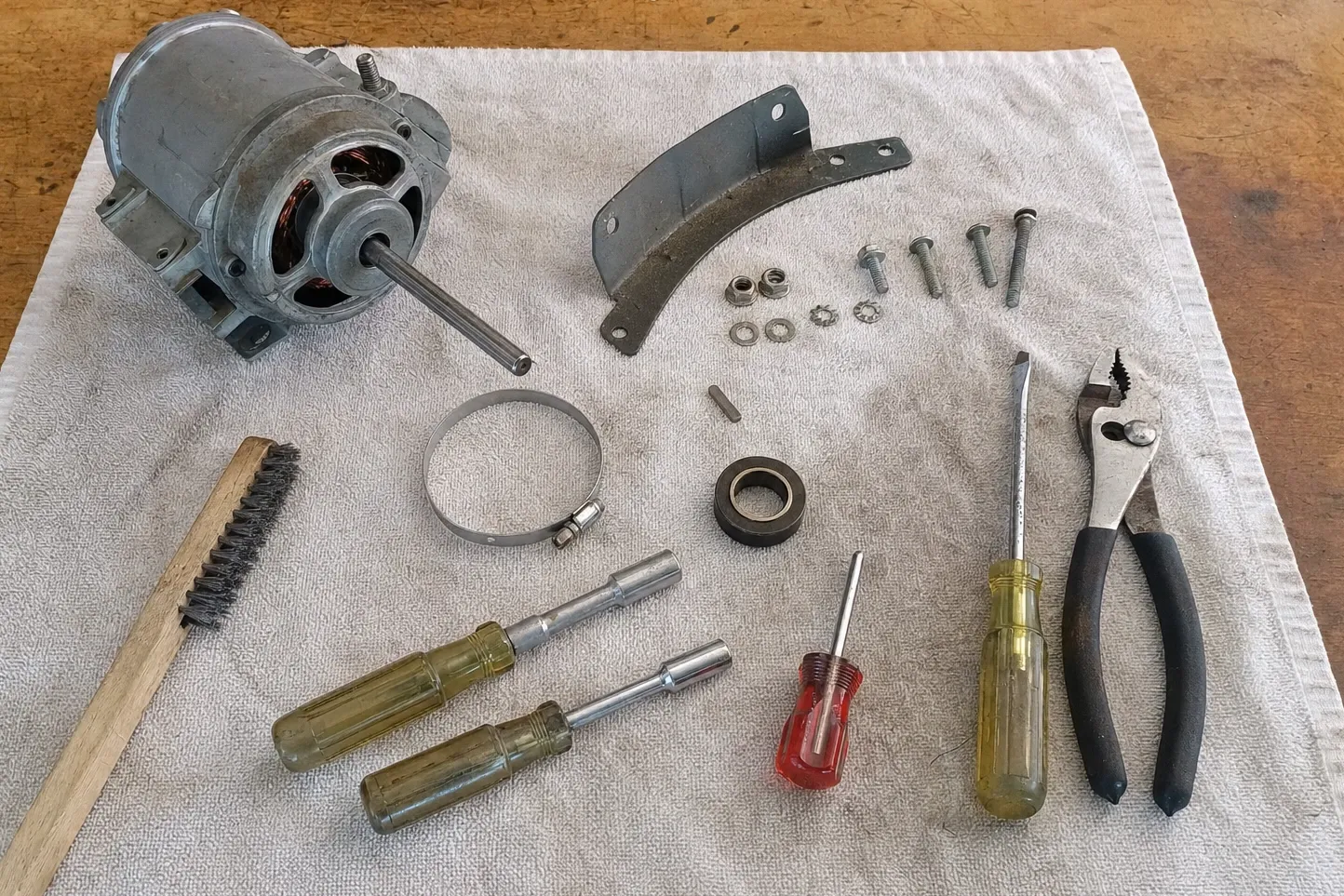
- Rotor visible through the end bell
- Rubber-lined bushing
- Curved mounting strap
Warning signs · Viking ovens
Why is the oven noisy while it preheats?
Heating is a noisy business: air moving, steel expanding and, on a convection setting, a fan turning. Those three sound quite different, and only one of them gets worse over time. A whine or a grind that has grown since last month is a bearing, and (213) 652-7030 is the number for that one.
What you can see, what it means, what to do now
See it
The noise starts soon after the oven goes on, rises with the heat, and sits somewhere behind the back wall rather than under the burners. Tapping and ticking comes and goes; a whine holds a note.
What it means
Ticks and pings are metal growing as it warms and they are normal on every oven. A steady rush is air being moved, also normal. A whine, a rumble or a scraping note is a motor bearing wearing out, and that one only ever gets louder.
What to do tonight
Run the oven empty on a plain bake setting and listen, then run it again on convection and compare. If the extra noise arrives only with convection, you have narrowed it to one motor. Keep cooking if you like — a worn bearing is loud long before it stops anything.
Still doing it after that? Call Viking Repair Pros of Los Angeles on (213) 652-7030. The $89 visit covers the fault-finding and comes off the repair.
The noise worth writing down
When a noise is intermittent, the most valuable thing you can do is note what the oven was doing when it made it — cold start or hot, empty or loaded, plain bake or convection. A bearing that only sings once everything is up to temperature behaves differently from one that squeals from the first minute, and the two are diagnosed in different orders.
Kitchens on the coast add one more possibility. Salt-laden air works on every bit of steel it can reach, and a motor that lives just behind a vented cavity is not sealed off from the room. A fan that has started grumbling in a Venice or Marina del Rey kitchen after a few quiet years is often corrosion at the bearing rather than mileage.
02Asked next
Follow-ups
Is a rattle the same as a whine?
No, and the difference matters. A rattle is usually something loose being shaken — a rack not sitting square on its rails, a pan touching a wall, a cover that has worked a screw free. It changes if you move things. A whine comes from a part that is turning, and rearranging the shelves will not touch it.
Next in the reference
Signed
Birgit Halloran
- Works on
- ovens and heating
- Time served
- 24 years