Oven Repair
Why does only one cavity of my double oven work?
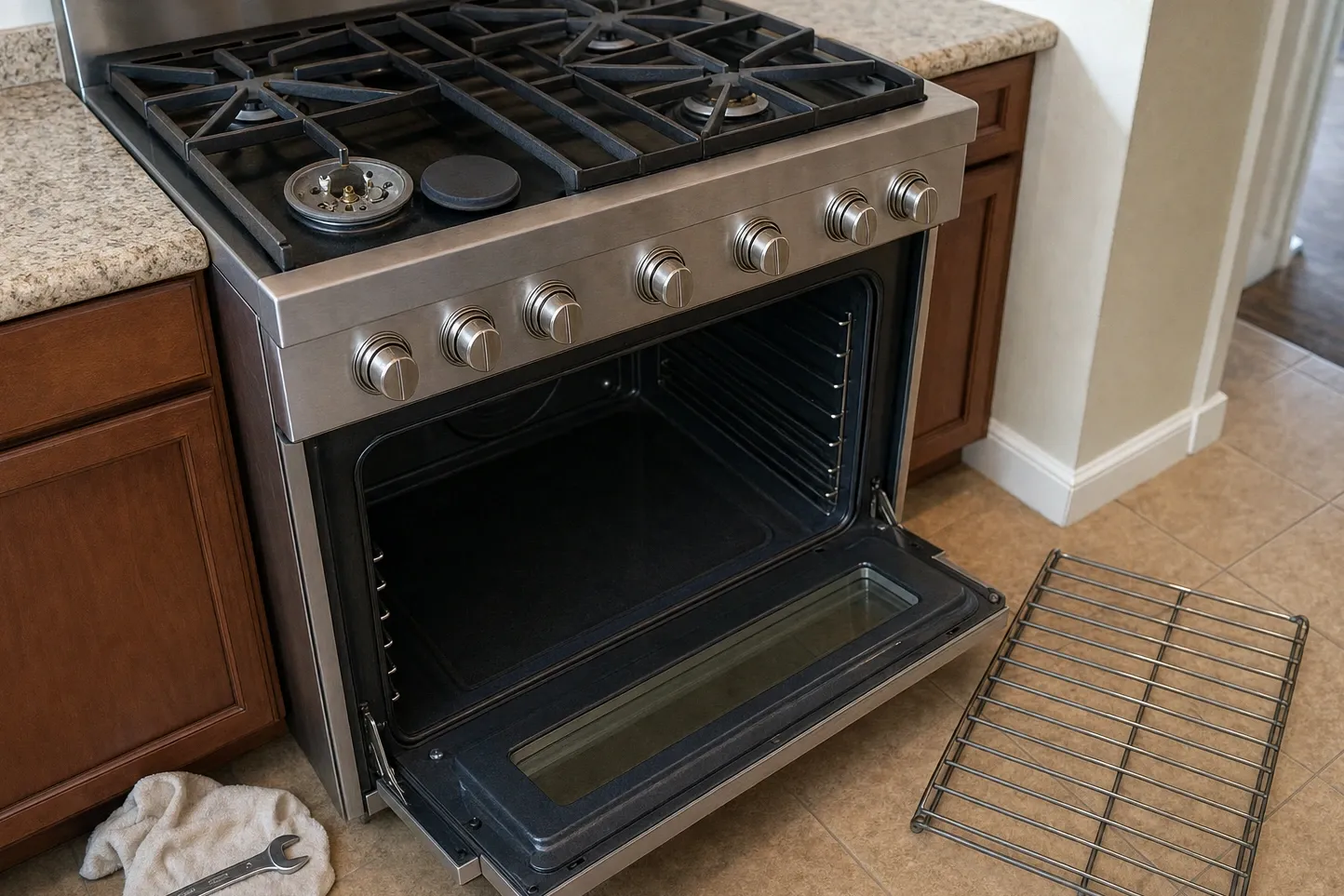
One cavity heating normally while the other stays cold is the most useful thing an oven can tell you. The working half has already cleared everything the two ovens hold in common, and that is most of the machine. What is left is whatever the cold cavity owns by itself, plus the piece of the control that speaks to it.
That is why this fault is often cheaper than it looks from the kitchen floor. You are not looking at a broken appliance. You are looking at one half of an appliance with a short list of suspects.
What the two cavities have in common
A double oven is one appliance, not two appliances stacked. It is fed by a single circuit, it sits in a single opening, and the wiring behind it runs as one loom. If the supply had gone, you would know: nothing would light, neither cavity would respond, and the display would be dead rather than helpful.
Whether the two halves answer to one control board or to a board apiece depends on how that particular model was built, and it is not worth guessing at from the front. It is among the first things established on a visit, because it changes what the repair is.
What they do not share, and what that rules in
Each cavity makes its own heat. It has its own heating parts, its own temperature sensor, its own door and, where there is a clean cycle, its own latch. A cold cavity sitting beside a working one points straight at that short list.
Two exceptions are worth knowing before you conclude anything. The first is the control: it can stop calling for heat in one cavity while keeping the other perfectly happy, and from where you are standing that looks identical to a dead heating part. The second is a cavity that is being held back rather than broken — by a lock, by a timed programme still sitting in memory, or by a setting the display is not making obvious.
The test you can run tonight, with nothing but the controls
None of this needs a tool and none of it means opening anything.
Set the working cavity to bake and let it come up, so you know the supply and the control are alive. Then ask the cold one for the same thing and listen. A cavity that is drawing current ticks quietly as its metal grows; a gas cavity makes a sound you will already recognise from the good half. Silence where there should be something is information.
Now ask the cold cavity for a different job. If broil does something and bake does nothing, or the reverse, you have narrowed the fault to one circuit rather than to the whole cavity — and that single observation saves real time later, so write it down.
Then clear the things that hold a cavity back. Make sure the door is properly shut. Make sure no clean cycle is running and no lock is on. Cancel any programme the control is still holding, and set the time of day if it is flashing, because on many ovens a control that has lost the clock will not accept a cook at all.
Stop there. If the cold cavity is still cold after that, the next step is a meter, and a meter belongs behind a panel rather than in a kitchen drawer.
What a visit confirms
Three questions get answered, and the order is the whole point. Does the control ask that cavity for heat? Does the part that makes the heat respond? Does the sensor report back honestly? Working through them in that sequence is what stops a perfectly good part being replaced because the fault was upstream of it.
The same visit settles the one-board-or-two question for your model, which matters because a board and a heating element are very different repairs with very different parts to source. Viking Repair Pros of Los Angeles takes bookings on (213) 652-7030. The visit is $89, which buys the diagnosis, and that figure comes off the bill when the work goes ahead.
When you call, say which cavity is dead, whether it does nothing at all or only some things, and what the display is doing while you try. Those few details are worth a good deal of bench time.
Follow-ups
Can I carry on using the half that works?
Usually yes. If the good cavity heats normally, nothing smells hot or electrical and the breaker is holding, there is no reason to stop cooking in it. Switch the whole appliance off and call Viking Repair Pros of Los Angeles on (213) 652-7030 if the breaker trips or you smell anything burning.
Is it always the lower cavity that fails?
No, though the busier one tends to go first, and in most kitchens that is whichever cavity gets used for everything from a weeknight tray to a roast. Position matters less than hours. A cavity that has run a clean cycle many times over the years has asked more of its door hardware as well.
Does one dead cavity mean replacing the whole oven?
Rarely. The parts that fail inside a cavity are the ones built to be replaced, and reaching them does not usually mean disturbing the half that still works. Replacement becomes the honest conversation only when a part is no longer made for an older build, and that is worth establishing before anything is ordered.